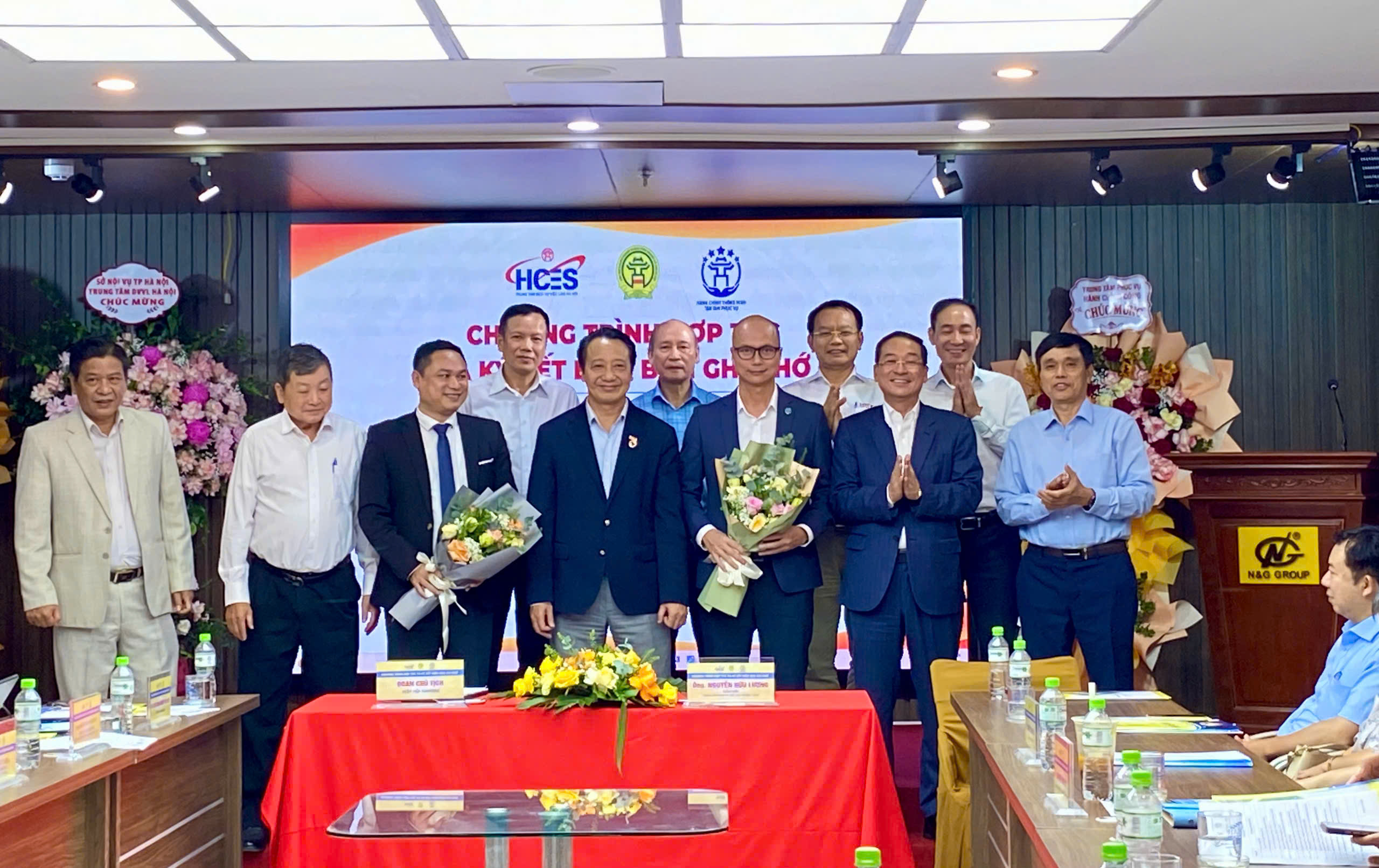

Mr. Nguyen Hoang, Chairman of N&G Group, acknowledged that domestic supporting industry enterprises (Supporting Industry Enterprises) are leaving open potential market shares in the Vietnamese market and from there can enter the world's supporting industry processing and manufacturing market share.
At the edge... of the global production chain
Mr. Hoang assessed that since Vietnam had a policy of innovation and openness to attract FDI, large foreign enterprises and corporations have entered Vietnam such as Toyota, Honda, Ford, Intel, Panasonic... But since that day, we have not fully completed the policy to promote Vietnamese enterprises to participate in the supply chain of producing auxiliary components for FDI corporations. On the other hand, there are not enough mechanisms to encourage and even have regulations to increase the binding of these enterprises and corporations to localize parts and accessories for their products produced in Vietnam.
 |
| Number of sales Pure Vietnamese enterprises participating in Samsung's production network are still modest. |
On the side of FDI enterprises, due to many factors and for the profits of these corporations, as well as because these corporations have deeply and firmly participated in the global supply chain, especially enterprises in their own countries, therefore, support to create conditions for Vietnamese enterprises to participate in production and supply of components for FDI enterprises is very limited. Typically, Samsung has announced the need for hundreds of types of products, Toyota and other international and domestic corporations have announced hundreds of types of parts and accessories needed, but Vietnamese supporting industry enterprises cannot meet them due to many factors brought by both sides.
On the other hand, Vietnam's participation in free trade agreements (FTAs) will be both an opportunity but also pose many big challenges for Vietnamese businesses. If Vietnamese enterprises do not innovate themselves, the support from State management agencies is limited and untimely while the capacity of enterprises is limited, coordination and synchronization are still inadequate, leading to the already weak Vietnamese enterprises becoming weaker in production and business.
Mr. Nguyen Chi Dung, Minister of Planning and Investment, acknowledged that Vietnam's supporting industry is still very weak, unable to meet the needs of domestic production. Some of Vietnam's strong industries such as electronics, textiles, footwear, automobile and motorbike assembly... have almost no supporting industry and we are heavily dependent on imported raw materials from Japan, Korea, Taiwan...
Therefore, this leads to fragmented and passive production, high production costs, and low added value created in Vietnam. Currently, data from the General Statistics Office shows that the majority of Vietnamese supporting industry enterprises have not applied international standards or useful production management tools.
Specifically, only about 20% of businesses have ISO 9,000 certification; 90% of businesses have ISO 14,000 certification. Regarding technology level, currently about 30% of businesses say they are still using manual control technology equipment, less than 10% of businesses use robots in production lines. This shows that the capacity of Vietnam's supporting industry enterprises is quite low in both production management capacity and technology level.
The Minister of Planning and Investment is also concerned about Samsung's localization rate. In 2020, Samsung exports reached a turnover of 56.5 billion USD, and in 2021 it will be more than 65.5 billion USD. The export number is very large and increasing, however, there are only about 620 domestic and foreign enterprises participating in providing materials and components for Samsung projects in Vietnam.
Notably, about 240 level 1 enterprises signed directly with Samsung, of which only 51 are Vietnamese enterprises. For level 2 enterprises, there are 380 enterprises, including 203 Vietnamese enterprises. This shows that purely Vietnamese enterprises participating in Samsung's production network are still modest.
Need policies to encourage investment and connection
"The resources of Vietnamese businesses are limited, many businesses only chase short-term profits and spontaneously follow movements, only want to do small commercial businesses, quickly make profits and want to get rich quickly from real estate and stocks rather than investing in supporting industries."
Mr. Nguyen Hoang, Chairman of N&G Group
The Minister of Planning and Investment frankly said that our industry still falls into the state of outsourcing and assembly, with little added value created for the country because Vietnamese enterprises are not qualified to connect with FDI enterprises.
"FDI enterprises believe that Vietnamese enterprises are not qualified to sign with them, while Vietnamese enterprises share that if they are not sure they can participate in that chain of links, they will not dare to invest," the Minister of Planning and Investment stated in fact.
Accordingly, the Minister of Planning and Investment asked what our policy should be so that domestic enterprises can grow, to be eligible to approach and sign with FDI enterprises to develop together.
The Minister of Planning and Investment said that it is necessary to improve institutions, including the Law on Industrial Development. Currently, all sectors and fields have laws except industry. This is an important industry but there is no law to regulate it.
In particular, the Ministry of Planning and Investment is amending Decree 82 on the management of economic zones and industrial parks in Vietnam. In particular, this agency has proposed many new policy mechanisms to develop economic zones and industrial zones in the new situation such as access to land, capital, and technology.
From a business perspective, Mr. Nguyen Hoang recommended that the Government soon develop a Law on Supporting Industry and submit it to the National Assembly for promulgation as soon as possible. At the same time, it is necessary to develop specific plans and roadmaps to develop enterprises in the supporting industry, determined to reach 5-10% of the total number of Vietnamese enterprises by 2025 with a vision of 2030.
In addition, there is a need for urgent, specific solutions regarding capital (interest rate and loan period, loan limit, collateral...), because according to regulations on loan conditions (loan collateral, counterpart capital of the investor, loan interest rate, loan period...) there are still obstacles for enterprises producing supporting industry products.
"Connecting large international businesses and corporations present in Vietnam is extremely important, promoting and mentoring as well as placing orders, supporting Vietnamese businesses to produce parts and accessories to supply them so that Vietnamese businesses can directly enter the supporting industry production chain," Mr. Hoang recommended.
Especially on the issue of starting a business, Mr. Hoang believes that there needs to be preferential policies to encourage Vietnamese youth who have studied and worked at companies and countries with developed supporting industries to start their businesses and become 100% Vietnamese supporting industry entrepreneurs and enterprises.
"The resources of Vietnamese businesses are limited, many businesses only chase short-term profits and spontaneously follow trends, only want to do small commercial businesses, quickly earn profits and want to get rich quickly from real estate and stocks. They do not focus, focus on and produce supporting industry products and most Vietnamese businesses only see too great difficulties when investing in supporting industry", Mr. Hoang assessed.
Similar to the same opinion, Ms. Truong Thi Chi Binh, Vice President and General Secretary of the Vietnam Supporting Industry Association, shared that it is true that not many people are interested in investing in supporting industry. In the field of processing and manufacturing industry, there are only about 300-400 companies participating, partly because the field is difficult and the profits are not attractive. Therefore, only those who truly love and are passionate about the profession will invest in this field, otherwise they will invest in more attractive fields such as real estate... Therefore, there needs to be a clear incentive mechanism to attract capital flows into the supporting industry in the coming time.
*Source: vnbusiness.vn