Minister Nguyen Chi Dung - Ministry of Planning and Investment shared that the development of supporting industries is extremely important in shifting our economic structure towards industrialization and modernization, it has... added value and competitiveness, contributing to increasing the proportion of contribution of industry... in the sectoral structure... of the economy. And also has an important role in... global.
In addition, it also makes a huge contribution to export, state budget revenue, job creation, planning and development of many industries... a lot. That is to see the role of the supporting industry. In recent years (the last 2 years), the impact of the Covid 19 epidemic has been extremely complicated, but the current business community's contribution also accounts for a relatively high proportion. 16.69% in 2020 and has increased to 25.3% in 2021 and that is also a prominent highlight of economic development. Although we have achieved so many efforts and results, you can also see that Vietnam's supporting industry is still very weak, unable to meet the needs of domestic production.
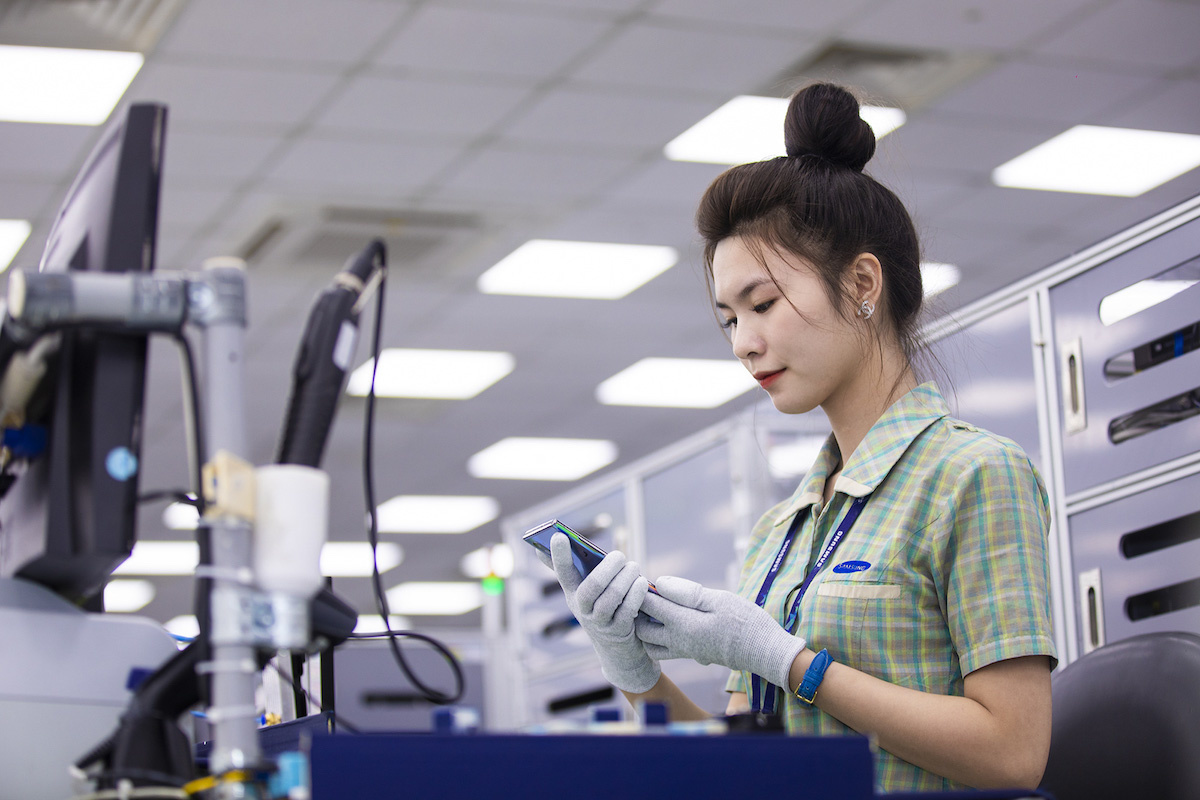
In Vietnam's strong industries such as electronics, banking, footwear, cars, motorbikes, etc., there are almost no accompanying supporting industries. And we are heavily dependent on imported raw materials, and we still have to import spare parts and components. Previously it was Japan, then Korea, Taiwan, we had to import a lot. This will lead to passive production, high production costs and low added value. Mainly so, our industry will be in a difficult situation. About 25 years ago, I participated in a research project of a shoe manufacturing enterprise in Vietnam and a foreign enterprise joined it. When they exported 17 USD to the level 1 distribution business, the cost of production was 15 USD. So the goods produced in Vietnam only have 2 profits, 1 Dollar is for the workers, electricity and water and 1 Dollar is for the factory investor, that's all. But when people switch to a level 2 distribution unit, it is already 60 USD per product and when sold at retail it is 120 USD. So we see that an entire pair of $120 shoes created in imported Vietnam costs $15 and its value is only $2. And so it leads to the current situation we are saying a lot that in an economy with 13:27... we are not qualified to continue... just go their way... 13:47 No one will let an unqualified person sit with them, study in the same class, do the same job, never like that. We have done a lot of surveys, foreign businesses say that Vietnamese businesses are not qualified, not qualified, have low awareness and hope to sell at high prices. If we can ensure the conditions are met, we will sign. But on the contrary, what do Vietnamese businesses say? Our businesses say: if we are not sure that we can participate in that field or supply chain, we will not be able to do it. Once I invest, I know who to sell to and how to participate? So we keep struggling with the chicken and the egg. So in what way have we been restricting foreign businesses for a long time? That is the most correct policy, it is not about restricting foreign investment and it is not about not creating conditions for Vietnamese businesses to grow. Later I will say what Vietnamese businesses must do to grow themselves, or if they don't want to grow or don't dare to grow up. The bottom is the things that we feel need to support us on many issues. So currently, most supporting industry enterprises have not applied international standards or internal production management tools. Only about 20% of businesses have ISO9000 quality management certification. Regarding the level of industry and technology, about 30% of our businesses today say they are still using manual control equipment, which means it is extremely outdated. And over 50% use semi-automatic equipment and over 10% of businesses use automation equipment and less than 10% of our businesses use robots accompanying support lines. Our survey shows that our technology level is very low. This shows that the capacity of enterprises in the supporting industry in Vietnam is still quite low in terms of both management capacity, production capacity and technology level, and accordingly, there is an issue that I am also very concerned about: Samsung's data. Reported to Mr. Tu that Samsung exported 56.5 billion US dollars in 2020, 65.4 billion US dollars in 2021. That is, the number is very large and increasing. However, our whole country has 620 domestic and foreign enterprises participating in providing components for Samsung projects in Vietnam. And level 1 enterprises have about 240 enterprises. Of these 240 enterprises, only 51 are in Vietnam. As for level 2 enterprises signing contracts with level 1 enterprises, there are 380 enterprises and of which 203 are our enterprises. So, respectfully, Mr. Tu and all of you in the 51 enterprises and 203 Vietnamese enterprises participating in level 1 and level 2 enterprises, there are many enterprises with foreign capital in them, not simply Vietnamese enterprises. So we can see that... 18:22 Vietnam is very small, only accounts for a modest market share and proportion. Currently, through working with Samsung ministries and branches...18:40, it is a project to train experts to advise on improvements for businesses. then a training project on molds for businesses and thirdly a project to support improvement consulting for businesses. Samsung also implements the policy of the state and ministries to create support for Vietnamese businesses to develop, rise and ultimately participate in this chain, not letting other businesses or Vietnamese businesses stand out. We, along with the Ministry of Industry and Trade as well as Samsung, must coordinate closely to promote support for Vietnamese businesses to reach higher heights... 19:30 participate in 5-60 billion exports. This number for us may only be ⅕, 1/10 of Thailand's...
19:53: So now our supporting industry is slow to develop and facing difficulties, which in turn entails many very important things, that is, industrial zones are also developing with difficulty. If our industrial parks want to develop, supporting industries must also develop. A typical example is our …(20:13). We have had a very difficult time in recent years, of course related to Director Gia Lai, but it is true that Vietnamese policies and businesses have not had the conditions to develop or have not been able to develop, which has also led to difficulties for the supporting industry. Supporting industrial parks and businesses that are slow to develop will also lead to large foreign enterprises, especially enterprises with high technology levels, not investing. Because if we have good supporting technology and large foreign businesses require good supporting technology in the host country, people will participate more actively and effectively. It's a very interconnected issue.
Ladies and gentlemen, as we know, the Party's resolution has just approved the vision of national development until 2025 with great goals and aspirations. One thing that is very necessary is to affirm the industrialization and modernization of the country. If we want to be strong, want to be prosperous, want to achieve this goal and that goal, we must do a lot, and thoroughly carry out the work of industrialization and modernization of the country. And only then can we overcome challenges such as falling into the middle-income trap, or we must achieve goals such as becoming a developed and high-income country by 2030 or a developed and high-income country by 2045. Those are the problems that have already been raised. In particular, the issue of industrial and supporting industry development is extremely important and urgent for us to realize the set goals. This problem lies on the shoulders of all business communities and local state agencies. We must have specific professionalism to deploy and realize this goal.
In the coming time, we see a few issues that need attention and implementation. The first is the issue of developing and implementing the Party's policies with proposed solutions, especially Resolution No. 23 of the Prime Minister on improving the development of the semiconductor industry. From there, we promote awareness from the entire political system to the business community and semiconductor consumers. Let's all join hands to develop the semiconductor industry in the coming time. Only then will we be able to complete the set goals. Second, this is what I am worried about and concerned about: making more laws. In all industries and fields today, there is no industry or field without laws, except for industry. Industry is a very important sector but there is no law. Currently, there is a set of outlines that are being submitted for approval and include supporting industries. This is a very good opportunity for us to reevaluate and have research and solutions to support and promote businesses in the future. At the same time, amend Decree 1101 to adjust the issues that have been limited and inadequate in recent times. Particularly for investment shares, we are amending Decree 82 on current industrial parks and economic zones. In particular, we have also researched and boldly proposed new policies to develop new industrial parks. I say for example, what do businesses need and want today? Businesses are in dire need of land. Second is capital. Third is technology. Just go around those issues. Without those things we cannot do it. We have researched that if with this approach, industrial parks only want to rent most of it to large businesses at wholesale prices, then small businesses that want to rent 500, 1000, 2000 will never be able to. People don't even continue. Foreign businesses all rent 100 hectares, but here he rented 100m, 1000m, no one took over. They say that's all they need, but they can't reach it. Second is about price. If you keep using prices like big projects with high technology and high value-added tax, small and medium-sized enterprises and supporting technology enterprises will not dare to hire. Comrades also talked about investing millions and millions of dollars in technology and land, but this time we have very clear regulations requiring industrial zones when established to set aside 3% of land and not less than 5 hectares to prioritize supporting technology enterprises. Second, the land rental price is only calculated at 70% of the rental price for others. This is a requirement that infrastructure enterprises must comply with when building industrial parks. Previously, we assigned it to the locality in the planning of land for people's housing combined with a service area. But when it comes to the locality, there is almost no planning for housing and services for workers. This time we require housing service areas for workers to rent, cultural and service areas and commercial centers into industrial parks so that investors can recruit many workers. And if we have such a good environment, such a good ecosystem, then businesses will fill the industry. And domestic and foreign investments will support innovative industrial parks. Those are the policies we set out.
 >
>South Hanoi Supporting Industrial Park - Hanssip
In reality, as has been said, for small and medium-sized businesses we also need to innovate. For businesses, we recommend the following. Again and again, it's all related to the business. That is, what is the most prominent and lacking issue in businesses today? We also worry a lot about this issue. Essentially it's still a technology issue. Still struggling is the technology problem. If we don't have technology, if we don't have standards, we don't engage in enough productivity, we don't have quality. We don't have enough money to buy technology, we don't have the courage to invest in technology.
So, we have some suggestions like this. First, we buy shares in supporting technology businesses that have participated in Vietnam and are located in the world's supply chains. It is the fastest technological approach, in terms of both market and management. Later, when you grow up, you can transform it into your own business. That is the approach, the direction that I think is good. Second, there are currently Vietnamese engineering experts holding key positions in the production lines of businesses and industrial parks that are part of the guaranteed supply chain in Vietnam. We can encourage them to separate so that if they need to start a business, we can support them.
That is the fastest way to access technology and participate in the supply chain when we already have a relationship and need more support from the state. Third, businesses need to boldly apply technology transfer, invest, and purchase advanced new equipment, machinery, and technology. Fourth is labor training. Quickly train because we have very good capital. That's the resource. We are better than other countries in terms of resources, so we need to make good use of training these human resources. The problem is that we need to utilize the number of trained and skilled workers who have foreign languages from abroad. Because they have a lot to contribute, including health. Finally, accelerate digital transformation. The Ministry of Planning and Investment has just had a comprehensive program to support businesses. The faster the better, the more the better. If you need anything related to support for rapid digital transformation and improved competitiveness, please contact us. We are always ready to create any conditions to help. That is also the way for us to move faster. Above are some suggestions for businesses.
For ministries and localities, we also request to pay close attention and create favorable conditions for support. In addition to building and perfecting institutions, it is necessary to support land and capital enterprises, especially supporting technology enterprises. Regarding the proposal to pilot a preferential financial package for the supporting technology business community, we have the conditions to research it in depth, but after hearing it, we think we can support it. In the near future there will be in-depth research on this issue. We will report to the Government to form an incentive package to support businesses in developing specialized industrial parks.
*Source vietnamnet.vn