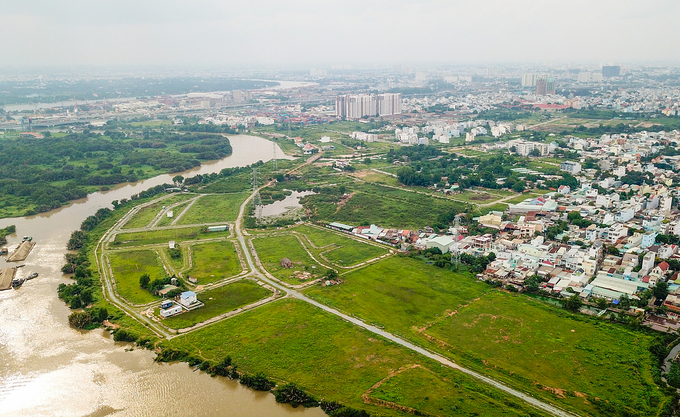
Housing projects located outside the inner-city districts of Hanoi and Ho Chi Minh City will still be able to transfer land use rights in the form of dividing lots and selling plots according to the new draft.
In the latest draft "Decree Amending and Supplementing a Number of Decrees detailing the implementation of the Land Law", the Ministry of Natural Resources and Environment has changed the content in the direction of removing the regulation prohibiting subdivision and sale of plots for housing projects not located in the urban districts of Hanoi, Ho Chi Minh City and other central and provincial cities.
In the old draft published in April, the Ministry of Natural Resources and Environment introduced regulations to expand the scope of areas where land division and sale projects are not allowed. This will make it impossible for not only Hanoi and Ho Chi Minh City, but also Hai Phong, Da Nang, Can Tho, and many other places to carry out land division and sale projects. Therefore, the proposal has caused many negative opinions because it is believed that the regulations are not practical.
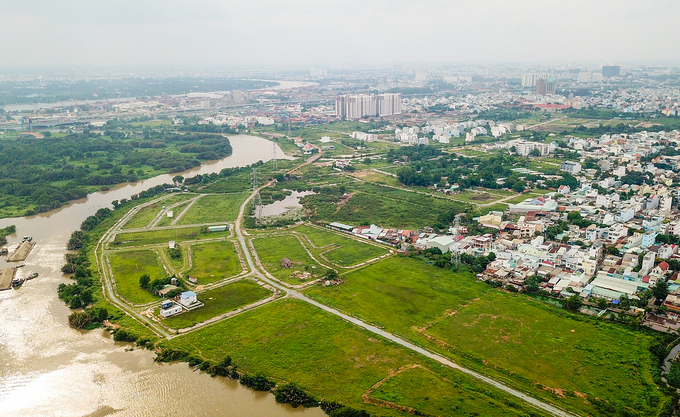
Associate Professor. Dr. Dinh Trong Thinh - economic expert analyzed that the regulations in the old draft could have a big impact on real estate businesses and the land market.
In addition, Mr. Thinh said that if tightening the activities of dividing lots and selling plots will create great pressure on management agencies and people in need of housing and land when the land fund in suburban districts of Hanoi, Ho Chi Minh City and in small provinces and cities is still large, the need to divide plots and sell plots is very large. "Those who want to divide lots or separate plots to give or give to relatives will not be allowed to do so," Mr. Thinh said.
Associate Professor. Dr. Tran Kim Chung - Deputy Director of the Central Institute for Economic Management Research, said that dividing plots and selling plots in areas with slow economic development and low urban development will help increase land prices and attract investment in land and urban areas. Therefore, this real estate business is still necessary.
For localities that are not yet urban, with large land sizes, subdivision and sale of plots can still be applied with strict requirements for compliance with planning during the construction process. "There are localities that are starting to move to the city and don't even have sidewalks. If there are restrictions on dividing plots and selling plots, all land resources will lie dormant, making it very difficult to attract investment and at the same time limiting people's rights," Mr. Chung commented.
Sharing about the situation of illegal plot division, sale of plots, even fraud, and property appropriation occurring in some localities recently, Mr. Chung said that the main cause comes from the illegal business thinking of a part of businesses and the management capacity of governments at all levels.
Similarly, Mr. Dinh Trong Thinh commented that the fact that investors only have to spend a small amount of money to build essential infrastructure can transfer land use rights - causing them to develop the mentality of connecting with some local officials to carry out projects that do not comply with procedures, requirements and quality according to planning... In addition, the actual demand for accommodation is always high, leading to the appearance of speculators and "land brokers", causing chaos. market and loss of security and order in areas with subdivisions and plots for sale.
Therefore, he believes that the authorities need to tighten management and supervision activities so that only projects with full legality and implemented by reputable investors will be licensed. In addition, the structure and construction progress of the project must be monitored - after a certain period of time, an urban area with synchronous infrastructure must be formed, with real people living there.
This expert also proposed to develop specific regulations to clearly identify locations that are allowed to be divided into plots in each locality and area based on management requirements, land fund and development planning. At the same time, publicize information about projects to divide plots and sell plots in specific areas.
He also believes that management agencies need to impose high taxes or administrative fines on owners who leave land vacant for a long time but do not build to put an end to the situation where investors set up projects to divide plots, sell plots, and then leave the land fallow.
Hoang Thang - According to vnexpress.net