
Strong movements in policies, growth goals and new value chain development orientations are opening up great space for domestic enterprises to raise standards, expand markets and participate more deeply in the global production network.
High growth target to create "market leverage"
Sharing with reporters from Investment Electronic Newspaper - baodautu.vn about the performance results in 2025 and development orientation in the coming time, Mr. Nguyen Hoang, Chairman of the Association of Enterprises Supporting Industry of Ho Chi Minh City. Hanoi (HANSIBA) believes that the current period is especially pivotal for the Capital's supporting industrial enterprises.
"2025 is a year of many challenges, when requirements for investment in technology, equipment, standards and administration are increasingly high. However, with the close guidance of the Hanoi People's Committee and the companionship of departments and branches, the supporting industry business community has achieved very positive results," Mr. Hoang assessed.
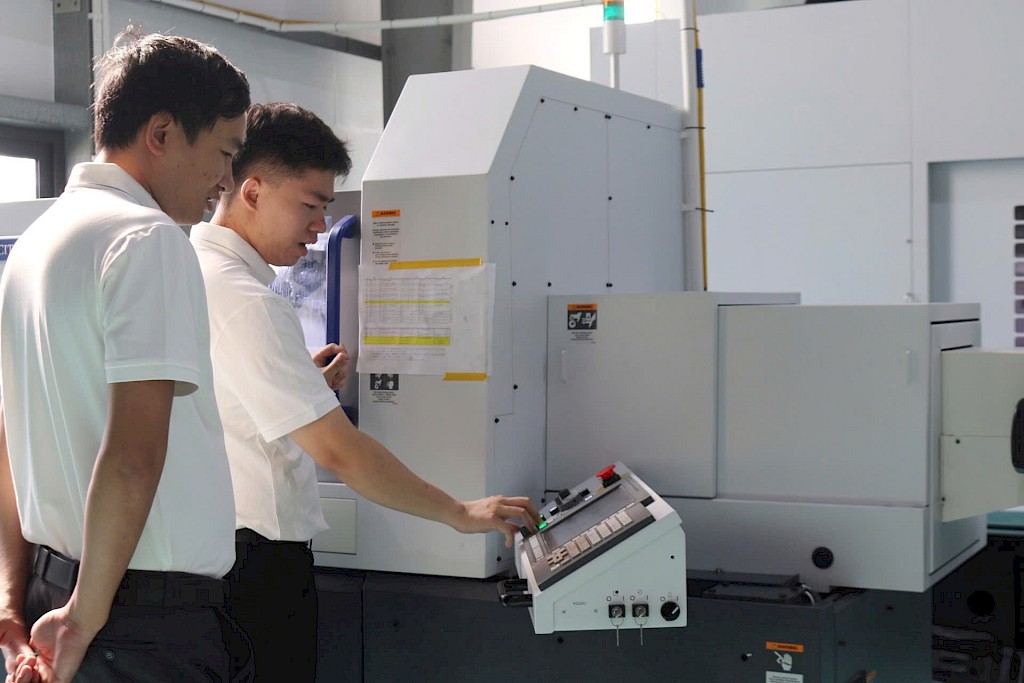
According to Chairman of HANSIBA, supporting industry enterprises of Hanoi in particular and Vietnam in general have participated more deeply in the global production chain, not stopping at simple orders but gradually supplying components to multinational corporations, and exporting many products that meet international standards.

“Không còn thời kỳ doanh nghiệp Việt Nam không làm nổi con ốc vít”, ông Hoàng nhấn mạnh. Hiện nay, nhiều doanh nghiệp công nghiệp hỗ trợ Hà Nội đã tham gia vào các lĩnh vực có giá trị gia tăng cao như linh kiện điện tử, thiết bị bán dẫn, phụ trợ cho hàng không - vũ trụ và các ngành công nghệ cao khác.
Bước sang năm 2026, cộng đồng doanh nghiệp công nghiệp hỗ trợ Hà Nội đón nhận một tín hiệu quan trọng từ định hướng phát triển kinh tế - xã hội của Thành phố. Tại Hội nghị Ban Chấp hành Đảng bộ TP. Hà Nội khóa XVIII, Thành phố đặt mục tiêu tăng trưởng GRDP 11%/năm, trong đó ngành công nghiệp phấn đấu tăng trưởng 9,5% ngay từ năm 2026.
“Khi Thành phố đặt mục tiêu tăng trưởng cao như vậy, đồng nghĩa với việc nhu cầu đầu tư, sản xuất, mở rộng chuỗi cung ứng sẽ tăng mạnh. Công nghiệp hỗ trợ chính là nền tảng để hiện thực hóa mục tiêu đó. Đây là cơ hội và dư địa cực tốt để doanh nghiệp công nghiệp hỗ trợ Hà Nội tăng tốc trong giai đoạn tới”, ông Hoàng nói.
Ông cũng nhấn mạnh Hà Nội đang sở hữu nhiều điều kiện thuận lợi để phát triển công nghiệp hỗ trợ như nền tảng công nghiệp tương đối hoàn chỉnh, hệ sinh thái công nghệ cao đang hình thành, mạng lưới doanh nghiệp đông đảo và chất lượng nguồn nhân lực thuộc nhóm cao của cả nước. Nếu tận dụng tốt, giai đoạn tới sẽ là thời điểm vươn mình về chất của doanh nghiệp công nghiệp hỗ trợ Thủ đô.
Kinh tế tầng thấp mở không gian tăng trưởng mới
According to Chairman of HANSIBA, besides traditional industries, the low-class economy is opening up a new development space for supporting industry enterprises in Vietnam. This field is associated with smart logistics, high-tech transportation, unmanned aerial vehicles (UAVs), monitoring, measurement, precision agriculture, marine economics, construction... industries that require supporting industrial product systems with high technology content.
“This is a great opportunity for supporting industrial enterprises, from components, sensors, control systems, electronic devices to technical materials, thereby participating more deeply in new value chains,” Mr. Nguyen Hoang commented.
For businesses to effectively participate in new fields, the key factor is still institutions. Businesses need clear, transparent and stable policies to feel secure in investing in research and production. Mr. Hoang appreciated that Hanoi has boldly applied a shortened institutional model to a number of key programs, helping to shorten procedures, reduce compliance costs and create conditions for businesses to have early access to new development spaces.
As of the second quarter of 2025, the City has 415,289 registered businesses, of which 218,282 are operating, accounting for about 23% of the total number of operating businesses in the country. In 2024 alone, Hanoi will have 28,937 newly established enterprises with a total registered capital of more than 290,464.9 billion VND; The number of operating businesses increased by 5.87%/year, creating more than 200,000 jobs.
In the field of industry - construction, Hanoi currently has 8,799 processing and manufacturing enterprises; 773 enterprises producing and distributing electricity, gas, and steam; 481 enterprises providing water, garbage and wastewater treatment; 19,483 construction enterprises.
In 2024, the City's GRDP at constant prices increases by 6.52%, of which the industrial and construction sector increases by 6.21%, contributing 1.34 percentage points to overall growth. In that picture, supporting industries are identified as the "soft infrastructure" of production, determining the level of supply autonomy, the ability to participate in the value chain and the long-term competitiveness of the economy.
The assessments and expectations from the supporting industry business community are also the throughout spirit of Decision No. 6126/QD-UBND dated December 10, 2025 of the City People's Committee. Hanoi on approving the Supporting Industry Development Program for the period 2026 - 2030, with a vision to 2035.
According to the Program, Hanoi aims to develop supporting industries in depth, associated with global value chains, with businesses as the center and the State playing a constructive role. The program aims to increase autonomy in the supply of components, spare parts and materials; reduce import dependence; limit the risk of supply chain disruption; at the same time enhancing the added value and attractiveness of the investment environment.
By 2030, Hanoi strives to have about 1,200 supporting industry enterprises, of which over 40% have production systems and products that meet international standards; By 2035, this scale will increase to about 1,400 enterprises, with 45% meeting international standards.
Priority fields include manufacturing components and spare parts for electronics, automobiles, mechanical engineering - automation; supporting industries for textiles, garments, footwear; and industrial support for high-tech, artificial intelligence and digital transformation. The program also focuses on supporting businesses to improve management capacity, human resource development, technological innovation, digital transformation and market expansion.
From the perspective of businesses to the City's policy framework, it can be seen that the period 2026 - 2030 is opening a decisive time for Hanoi's supporting industries. High growth goals, newly formed economic sectors and increasingly clear policy corridors are creating a rare resonance.
“The opportunity is very clear, the problem is whether businesses have enough determination, enough capacity and enough vision to grasp it,” Mr. Hoang emphasized.
If this "window of opportunity" is well taken advantage of, the supporting industry will not only become a pillar of the Capital's production, but also an important support force to help Hanoi participate more deeply in the global supply chain in the new era of development.
Source: Investment Newspaper